Posts

Showing posts with the label technology

Carbon and Silicon

Image
We are all familiar with carbon intelligence - the natural human intelligence that has given us everything from the fire and the wheel,  through the Ved, Upanishad, the Mahabharat, the Laws of Mechanics, Electrodynamics, Thermodynamics all the way through to Relativity and Quantum Mechanics. Near the end of this journey we have run into silicon intelligence or the artificial intelligence that is demonstrated by machine learning and neural networks that has given us autonomous vehicles and software that learns to play very realistic games. But somewhere along the line these two forms of intelligence -- carbon and silicon -- are coming together to create what sci-fi has been talking about for many years : the cyborg -- part human and part machine. Where are we on this technology? Is it still science fiction? or is fiction becoming a fact. I explore this idea in this lecture that I delivered to the incoming  (July 2020) batch of  Data Science students at the Praxis Business ...

India’s Tryst with Thorium

Image
Time for India to lead the world with thorium power plants Global warming is a source of concern because it is believed to be leading to drastic changes in weather patterns.  This could cause serious damage to both the economy and the ecosystem. The burning of carbonaceous fossil fuels, coal and oil, are said to be the most important cause for global warming because they lead to the discharge of carbon dioxide into the atmosphere and this in turn traps solar heat through the greenhouse effect. Hence many activists have argued against the usage of coal and oil, in thermal power plants and internal combustion engines, and demand conversion to electric power. But while the usage of electric power is certainly clean, electricity itself needs to be generated somehow -- it just cannot appear by magic in those two or three holes in the wall. Two clean sources of electricity are solar and wind and activists have long argued that these should be the basis of electricity generation in...

Carbon and Silicon

This slide deck gives a brief overview of what neural networks are and what kinds of problems can they address. It has links to tutorials and actual codes so that the reader can actually start coding right away. However, this presentation goes beyond what is possible with only machines and explores how man and machine can be hooked together to address bigger and and more interesting challenges.

The Vedantin looks at Cloud Robotics

Image
In 2006-2007, in the early years of the Web 2.0 that emerged phoenix like from the ashes of the dotcom bust of 2000, Michael Wesch, Professor of Digital Ethnography at Kansas State University produced a video called “The Machine is Us/ing Us”. Prior to the emergence of Web 2.0, the world wide web was primarily a read-only medium to publish news and information to a passive audience. Web 2.0, with its focus on user generated content and a personal network of trust, created a read-write platform that allowed individuals to feed information easily into the system or “The Machine”. In the process The Machine learnt stuff that it never knew before. Wikipedia, one of the first Web 2.0 platforms, became the biggest repository of information, if not knowledge. This in turn allowed it influence a whole generation of students, journalists and web user, and shape the way they view the world. For example, this author who has studied in a Catholic missionary school, had had a great regard for Franc...

Google Sheets with SQL

The Google App Suite ( or G-Suite) of products is a powerful and free alternative to the traditional Office Suite and includes among others Docs, Sheets and Slides. Google Sheets offers full spreadsheet functionality and in this post and sample, we show how data stored in Google Sheets spreadsheets can be accessed with SQL. This post assumes that the reader is familar with standard spreadsheet terms like sheet, range and functions. Google Script The primary programming language used here is Google App Script, a javascript look alike that can be used to enhance and extend G-Suite products. Google script can also be interleaved with traditional HTML / CSS / JavaScript to create an elegant user interface as is shown in this example. A Google Script project sits in the Google Drive just like any other Sheet, Doc or Slides and consists of code in a code.gs file along with html files for the interface. Google Script functionality can be built into other Google products but in this exam...

The IT Professional & the Zone of Comfort

Image
Rapid advances in machine learning and the spectacular success of artificial intelligence software in, say, self-driving cars, voice recognition and chatbots for customer service, is sending shivers of anxiety through IT employees. The havoc that robots and automation technology has played with the jobs of blue collared workers on the shop floor, is now travelling upward into white collar offices and not a day passes without a new report about automation eliminating jobs. In India, the IT sector -- that includes actual software developers, application maintenance staff, tech-support personnel and BPO call centre operators -- seems to be particularly vulnerable and it is no secret that a sense of doom and gloom hangs over the cubicles and around coffee machines in large and small IT companies. To make matters worse, some companies have started to shed mid-level people managers, who have stopped writing code for years,  and even senior managers who give poor returns of billability ...

Quantum Computers

Image
Quantum mechanics is a subject that has the strange property of simultaneously being logically rigorous and yet completely counterintuitive. So much so, that even a towering intellect like Einstein could never bring himself to accept its principles even though products based on the same exist all around us. The earliest oddity, identified by Schrodinger, one of the founders of quantum mechanics is about a hypothetical cat that is neither dead nor alive until someone actually observes it. A similar oddity is that of quantum entanglement, where the behaviour of one particle is instantly affected by the behaviour of another particle, however distant it may be -- an example of “spooky” action-at-a-distance. Explaining these phenomena is beyond the scope and temerity of this article and so the reader would have to accept them here in good, almost religious, faith and carry on with the belief that such phenomenon has been observed and explained by scientists under the most rigorous experime...

Habitats in Space : Our Second Home

Image
If not on Earth, where else can humans beings be? Not as a traveller in a spacecraft or as a one-off tourist on the Moon but as an immigrant, or a colonizer who sets up a permanent residency for multiple generations. Given our current knowledge of physics and the state of propulsion technology, we really do not have the ability to travel to other stars in a reasonable amount of time, so our search for that second home for humanity is restricted to our own solar system. Where do we start? photo credit  Tittat427 There are two divergent points of view on where to locate such an extraterrestrial colony. Some believe that the colony should be located on a natural body like a planet, satellite or an asteroid while others think that the best bet would be an artificial structure in orbit around a planet or in space. There are pros and cons for both. What is common to both approaches is the realisation that any environment outside the terrestrial biosphere that we currently inh...

Smart-wallets to facilitate demonetisation

Image
The demon of demonetisation has scared the living daylights out of India’s cash-based economy. Whether the aam-aadmi is indeed suffering or whether the quantity of black money unearthed justifies the collateral discomfort is best debated on the sterile but bloody timelines of social media, but what we need right now is a way to facilitate payments -- small, ad-hoc payments -- that keep the engines of commerce running. Can technology play a role here? It certainly can. Let us see how. First we need to popularise software, app-based wallets like SBI Buddy and PayTM with which people can transfer money to each other merely on the basis of their phone numbers. While prima facie these are good options there are some drawbacks. First these are closed-systems, which means that one can only transfer money to someone who already has an identical wallet software. This means, for example, that a person can transfer money from his SBI buddy to someone who has SBI Buddy but not to someon...

Android as an IOT platform

Image
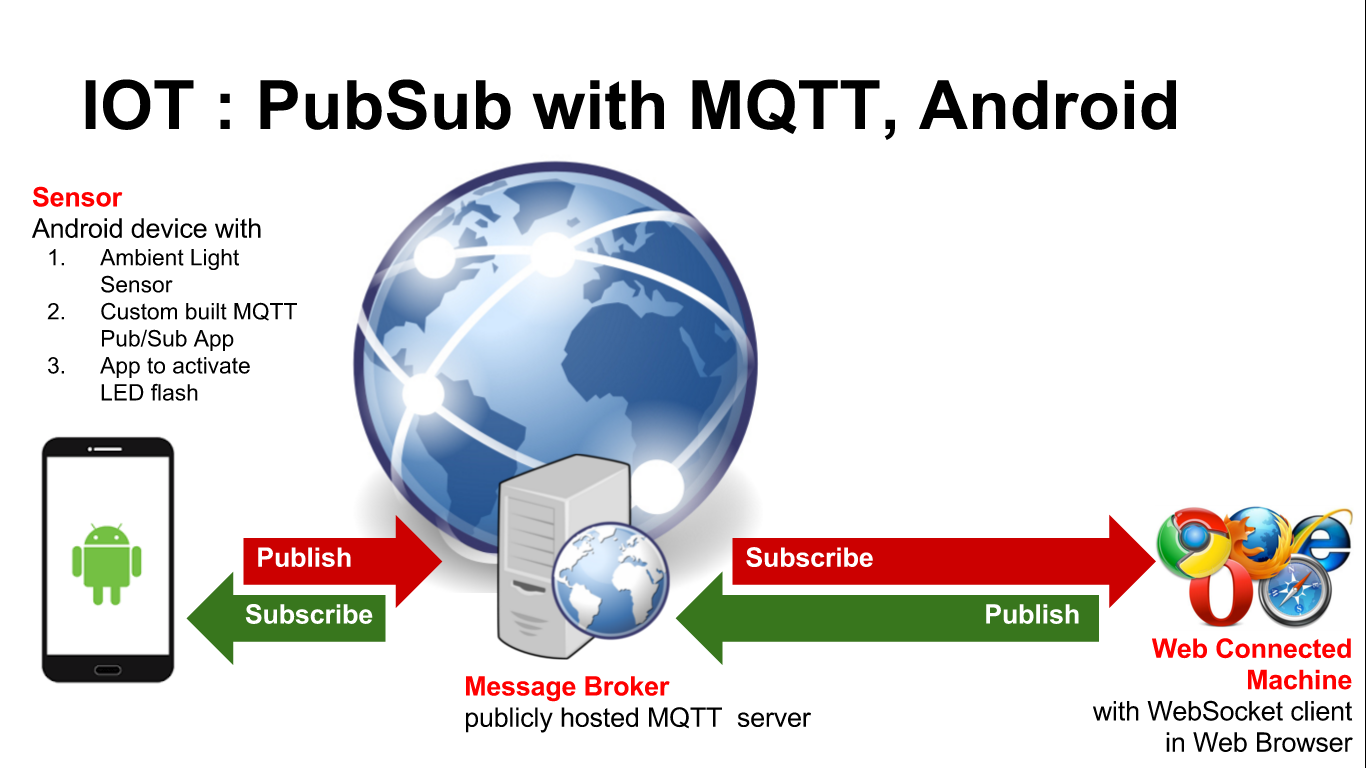
The term “platform” is very ambiguous when used carelessly by programmers and consultants in the information technology business. Under various circumstances, TCP/IP, Linux, Oracle and Java are all referred to as platforms even though they are neither similar nor comparable to each other. Even within the narrower definition of IOT we can look at platforms from at least three directions. First,  we have hardware based platforms like Qualcomm’s AllJoyn , Intel’s IOTivity , Apple’s Homekit  and Android/Brillo from Google. Second, we have different data transport protocols like XMPP - used in Internet Messaging (IM), MQTT - a publish / subscribe model for messages, DDS - another pub/sub model for data distribution services and AMQP - Advanced Message Queuing Protocol. Finally we have integrated, cloud based platforms from big and small companies like IBM Bluemix, Carriots, n.io, thethings.io, thingworx and many others that claim to provide end-to-end solutions to transfer in...