Posts

Showing posts with the label IOT

Android as an IOT platform
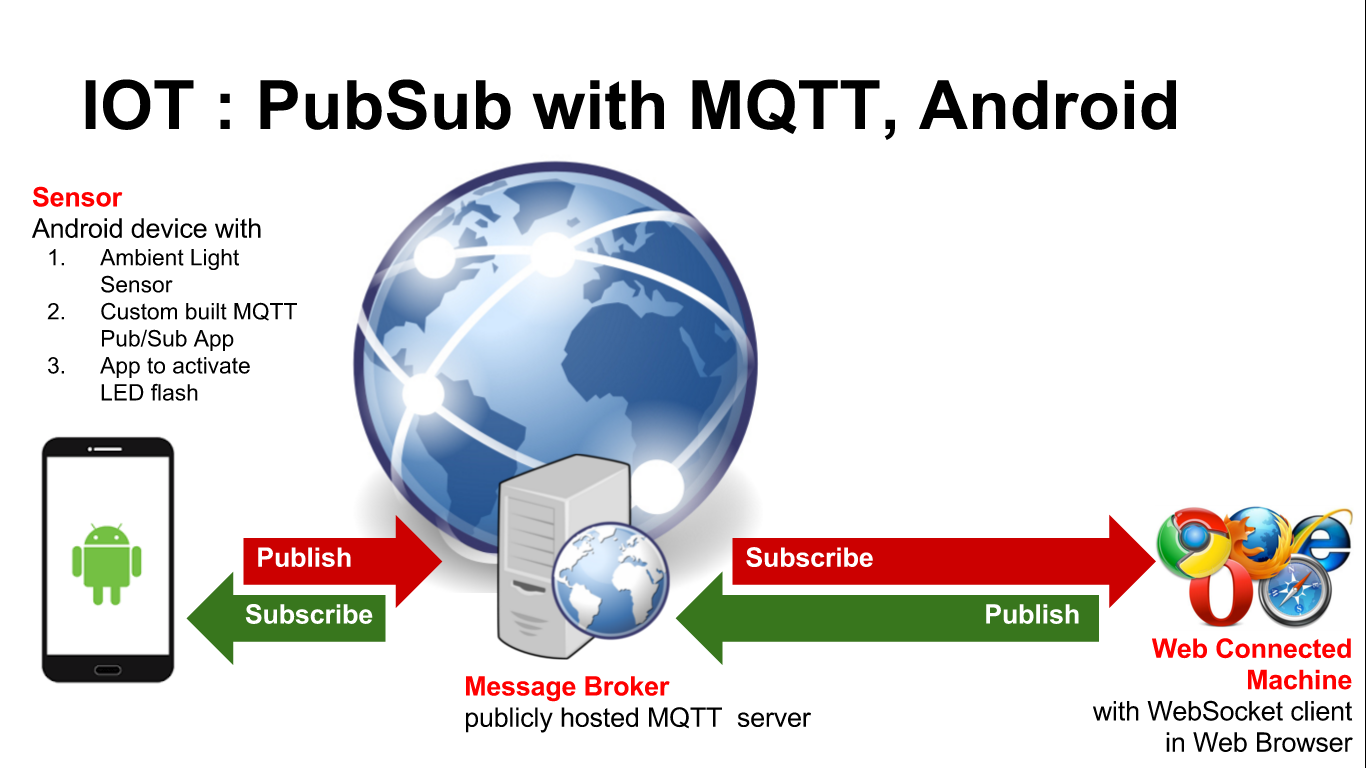
Image
The term “platform” is very ambiguous when used carelessly by programmers and consultants in the information technology business. Under various circumstances, TCP/IP, Linux, Oracle and Java are all referred to as platforms even though they are neither similar nor comparable to each other. Even within the narrower definition of IOT we can look at platforms from at least three directions. First,  we have hardware based platforms like Qualcomm’s AllJoyn , Intel’s IOTivity , Apple’s Homekit  and Android/Brillo from Google. Second, we have different data transport protocols like XMPP - used in Internet Messaging (IM), MQTT - a publish / subscribe model for messages, DDS - another pub/sub model for data distribution services and AMQP - Advanced Message Queuing Protocol. Finally we have integrated, cloud based platforms from big and small companies like IBM Bluemix, Carriots, n.io, thethings.io, thingworx and many others that claim to provide end-to-end solutions to transfer in...

Building the World Wide (mind)Web

The Advaita-Vedanta School of Indian philosophy posits that every sentient mind is interconnected as a part of a universal consciousness. Mapped into modern technology, this could be viewed as the biological equivalent of the World Wide Web consisting of computers connected over the internet. The web that we see today had its genesis with the Ethernet, invented in 1973 and TCP/IP adopted in 1983. How far away are we from a similar network of minds? Controlling machines with thought is the first step and Craig Thomas’ 1982 sci-fi novel, Firefox, was the first to predict thought-controlled aircraft. In just about 30 years since then, technology has progressed to the point where we have thought controlled-wheelchairs, not in research labs, but as a do-it-yourself project at Instructables ! In fact, this technology has now reached the consumer level and companies like Emotiv sell headsets that pick up electrical signals from the brain and work as an input device, similar to joystick ...

DIY IOT : Public Chat Servers to transport data over Internet

Image
A key challenge in building the "Internet of Things" is to be able to connect a device to a computer over the internet and to use as simple and lightweight an infrastructure as possible. In this post we demonstrate how a public XMPP chat server can be used to transmit data and commands from one device to another using a chat client at one end and a python "bot" sitting on the other end. We will demonstrate the ability to INSERT data into an SQLite  database, SELECT records from the same, play a variety of .wav files and execute any system commands on a "central" machine from any distant machine that supports an XMPP chat client. Before starting on this exercise, we searched the web for prior activity in this area and we came across this webpage  that suggests a similar approach for controlling devices over the internet, but the strategy explained here is simpler to code and implement. We looked for a list of public XMPP chat servers and selected ...

DIY IOT - Internet of Things or Yantrajaal

Image
In June 1999, when this domain YANTRAJAAL was created I had envisioned and written that : The World Wide Web has outgrown its initial concept of a mere network of computers and is being seen today more as a way of life. As it thrives and grows, this web is encompassing and pulling into itself a greater and greater diversity of devices – set top boxes, smart television sets, terrestrial and cellular phones, palmtops, network computers and very soon common household gadgets like refrigerators and microwave ovens. And along with these gadgets, our entire lifestyle is being dragged into this great web or Jaal. YantraJaal – is an eZine that reflects this new reality. In Sanskrit, “Yantra” is an artifice or a device and “Jaal” is the net or the web. YantraJaal thus, represents the web of connected devices.  Today, the Internet of Things or IOT is finally becoming a reality but most of us are still grappling in the dark on how to move beyond the simple web servers and the world of b...